

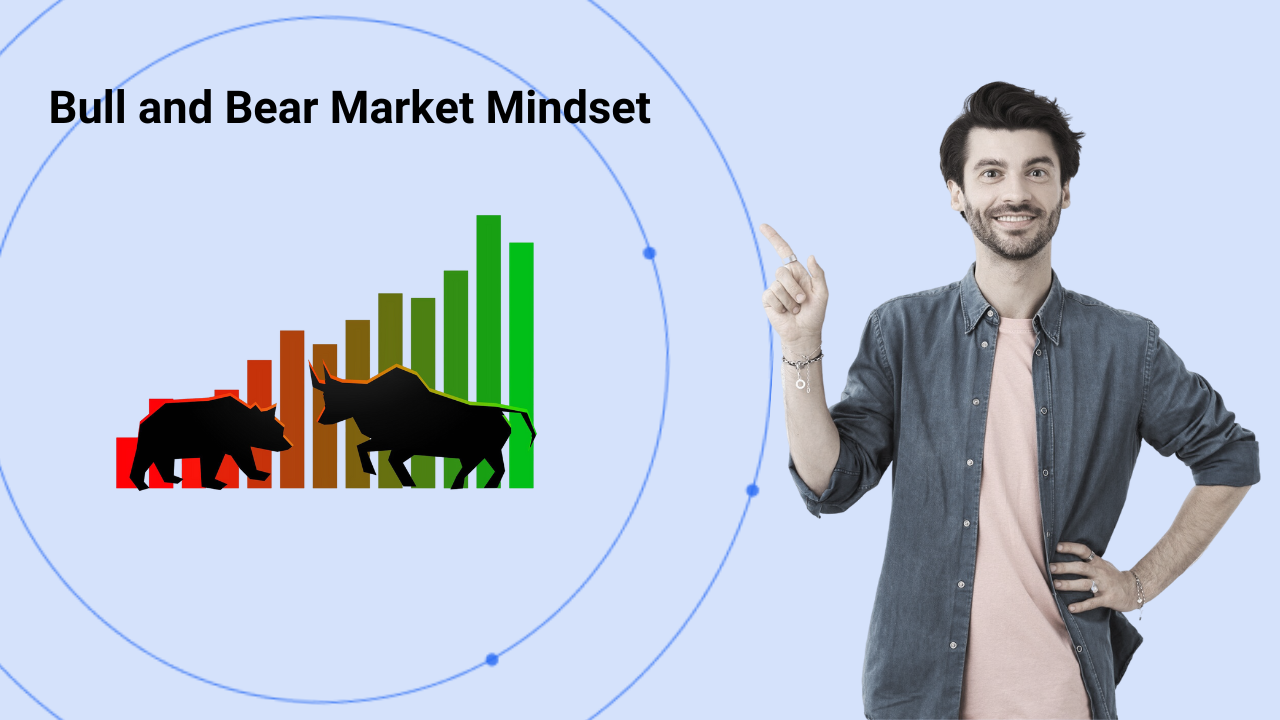
Markets, like life, move in cycles. Bull markets bring optimism, fast gains, and a rush of confidence. Bear markets, on the other hand, test patience, conviction, and emotional strength. While investors can’t control these phases, they can control how they respond.
Inspired by the wisdom of the Gita, this blog explores how clarity, emotional balance, and purpose-driven action can help investors navigate both extremes, not by predicting them, but by preparing for them with discipline and structure.
What throws investors off in bull and bear markets?
Market phases come and go, but investor behaviour often follows a predictable pattern. In bull markets, the mood is upbeat, returns are high, portfolios are green, and the fear of missing out sets in. This emotional high leads many to take excessive risks, over-allocate to trending assets, or abandon disciplined strategies in pursuit of quick gains.
In bear markets, the exact opposite happens. As prices fall, fear takes hold. Long-term plans are doubted, SIPs are paused, and panic selling becomes common. The emotional weight of seeing red can make investors feel like doing something, anything, even if it’s not strategic.
Both bull and bear phases can be equally disruptive if not met with emotional clarity. The challenge isn’t the market cycle itself, it’s the internal reaction that disturbs long-term investing.
What does the Gita teach about market cycles?
In the Bhagavad Gita, Lord Krishna speaks of detachment—not indifference, but the ability to act with purpose without being overly attached to outcomes. This concept is vital when navigating market cycles.
In investing, the Gita’s wisdom teaches that ups and downs are part of the natural flow of life—and that includes markets. Both bull and bear markets come and go, but what matters is how you act during them. The Gita encourages us to focus on our duties (or dharma) and to remain centred in the face of external fluctuations.
- Detachment in investing doesn’t mean ignoring the market or avoiding decisions—it means responding calmly and purposefully, regardless of short-term gains or losses.
- Consistency is more valuable than trying to predict the next move. By staying true to a long-term plan, investors can weather the highs and lows with steadiness and patience.
- Self-awareness helps investors understand their emotional triggers, enabling them to make decisions based on strategy, not fear or greed.
Emotional clarity is what allows us to stay balanced through any market cycle, just as inner peace enables one to perform their duty without attachment to the result.
How investors can stay balanced through both phases
The key to navigating market cycles, whether in a bull or bear phase, is discipline and emotional balance. Here’s how investors can maintain focus and consistency:
- Avoid euphoria in bull markets: During bull runs, it’s easy to get caught up in the excitement and overestimate the market’s trajectory. Stick to your predetermined asset allocation and avoid the temptation to chase speculative trends. Investing with clear goals keeps you grounded and reduces the risk of making impulsive decisions driven by fear of missing out (FOMO).
- Ride out bear markets: When markets dip, the instinct to protect one’s capital can be overwhelming. However, this reaction often leads to locking in losses. Instead of reacting emotionally, keep your long-term goals in mind and continue investing through systematic investment plans (SIPs). Even in bear markets, the core principle is to stay committed to your strategy, trust the process, and allow your investments to recover over time.
- Stay focused on your goals, not short-term performance: Whether markets are up or down, regularly reminding yourself of your long-term financial goals helps you avoid being swayed by short-term market movements. Revisit your goals periodically to ensure you’re still aligned with your original investment plan.
- Scheduled reviews instead of constant monitoring: Constantly checking your portfolio can amplify emotional responses during both bull and bear markets. Set a schedule for portfolio reviews, quarterly or semi-annually, and stick to it. This reduces emotional interference and allows you to reflect on long-term progress rather than getting lost in daily fluctuations.
By focusing on the process and keeping your long-term goals in mind, you can navigate both market extremes with greater emotional steadiness and rational decision-making.
How model portfolios support this balanced behaviour
One of the most effective ways to maintain balance and focus during volatile market cycles is through structured investment strategies—and this is where model portfolios come into play. Designed with behavioural principles in mind, model portfolios offer an anchor to keep you grounded, even when the market moves unpredictably.
Here’s how model portfolios can support balanced investing:
- Purpose-driven allocation: Each model portfolio is built around clear goals, whether that’s growth, income, or capital preservation. This means that your investments are purposefully chosen to reflect your risk tolerance and long-term objectives, rather than market sentiment or short-term noise.
- Reduced decision fatigue: When the market is moving rapidly, the pressure to make decisions can be overwhelming. Model portfolios take the guesswork out of investing by offering pre-determined asset allocation that aligns with your risk profile. This allows you to stay focused on your long-term goals, rather than constantly reacting to market movements.
- Discipline through automation: By using strategies like SIPs with model portfolios, you automate the process of investing. This helps you stay consistent and removes emotional interference. Investing regularly, regardless of market conditions, takes the emotion out of the equation and helps you focus on the process, not the outcome.
- Diversification and risk management: Model portfolios are designed to provide a balanced exposure to different asset classes, sectors, and geographies. This diversification reduces the impact of short-term market fluctuations and ensures that no single asset or market cycle will disproportionately affect your portfolio.
- Clear review and rebalancing guidelines: With model portfolios, rebalancing is based on a defined schedule or predetermined thresholds, rather than emotional impulses. This keeps your portfolio aligned with your financial goals, even when market conditions change.
In essence, model portfolios act as a stabilising force, ensuring that investors remain committed to their strategy without being influenced by the emotional highs and lows of market cycles.
Conclusion: Focus isn’t built by tuning out markets, it’s built by trusting your process
In the world of investing, market cycles are inevitable. Bull markets bring excitement, and bear markets bring uncertainty, but they are merely phases in the journey of wealth creation. The true challenge for investors is not predicting when these cycles will occur but maintaining focus and balance during them.
By investing with clarity and structure, supported by model portfolios and consistent strategies like SIPs, investors can stay true to their long-term goals, regardless of market fluctuations. The key is to act with purpose and trust the process, rather than reacting impulsively to short-term movements.
At Streetgains, our model portfolios are built to support this philosophy, helping investors navigate both bull and bear markets with emotional clarity, consistent discipline, and long-term alignment. The balance achieved through structured investing is the foundation for achieving lasting financial success.
Disclaimer:
The content in this blog is intended for informational purposes only and does not constitute investment advice, stock recommendations, or trade calls by Streetgains. The securities and examples mentioned are purely for illustration and are not recommendatory.
Investments in the securities market are subject to market risks. Please read all related documents carefully before investing.
Staying Balanced Through Bull and Bear Markets FAQs:
The key is to focus on your long-term goals and stick to your strategy. Avoid being swayed by short-term market fluctuations or emotional impulses.
Stay committed to your investment plan. Using systematic strategies like SIPs helps maintain consistency during downturns, allowing you to continue investing without panic.
Model portfolios provide a structured approach to investing, reducing emotional decision-making. They are aligned with your goals and risk tolerance, helping you stay focused during market swings.
Only if your risk profile or financial goals change. Frequent adjustments based on market conditions often lead to poor decision-making. Stick to your plan.
Maintain discipline by sticking to your allocation and avoiding the temptation to over-invest in trending assets. Focus on the long-term perspective.
SIPs help automate your investment strategy, reducing the emotional impulse to react to market fluctuations. They allow you to invest consistently, regardless of market conditions.
Streetgains offers model portfolios that are designed to help investors maintain balance and consistency through all market cycles, ensuring alignment with long-term goals.
FAQs:
-
1. How to earn money daily from trading?
Earning money daily from trading involves strategies like day trading, where traders capitalise on small price movements within the same day. Success requires real-time market analysis, quick decision-making, and risk management.
-
2. How to earn money from equity trading?
To earn money from equity trading, you need to buy stocks at a lower price and sell them at a higher price. Success depends on researching companies, analysing stock trends, and using technical or fundamental analysis.
-
3. How to earn money from share trading in India?
In India, share trading offers profit potential through buying and selling stocks on exchanges like the NSE and BSE. To maximise returns, traders should use market research, tools like technical analysis, and risk management strategies.
-
4. How to make money from share trading in India?
Making money from share trading involves selecting the right stocks, timing the market, and implementing trading strategies like swing trading or day trading while staying informed about market trends.
-
5. How to transfer money from a trading account to a bank account?
To transfer money from your trading account to your bank, log into your trading platform, navigate to the funds section, and initiate a withdrawal request. The money will typically be credited to your linked bank account in 1 to 3 days.
-
6. How to withdraw money from a trading account?
You can withdraw funds by logging into your trading account, selecting the withdrawal option, and selecting the amount to transfer to your bank account. Ensure your bank account is linked and follow any steps your broker requires.
Want Daily Stock Recommendations That Are Generated By Our Analysts ?
Join 3 Lakh+ Investors who have tried our Services