
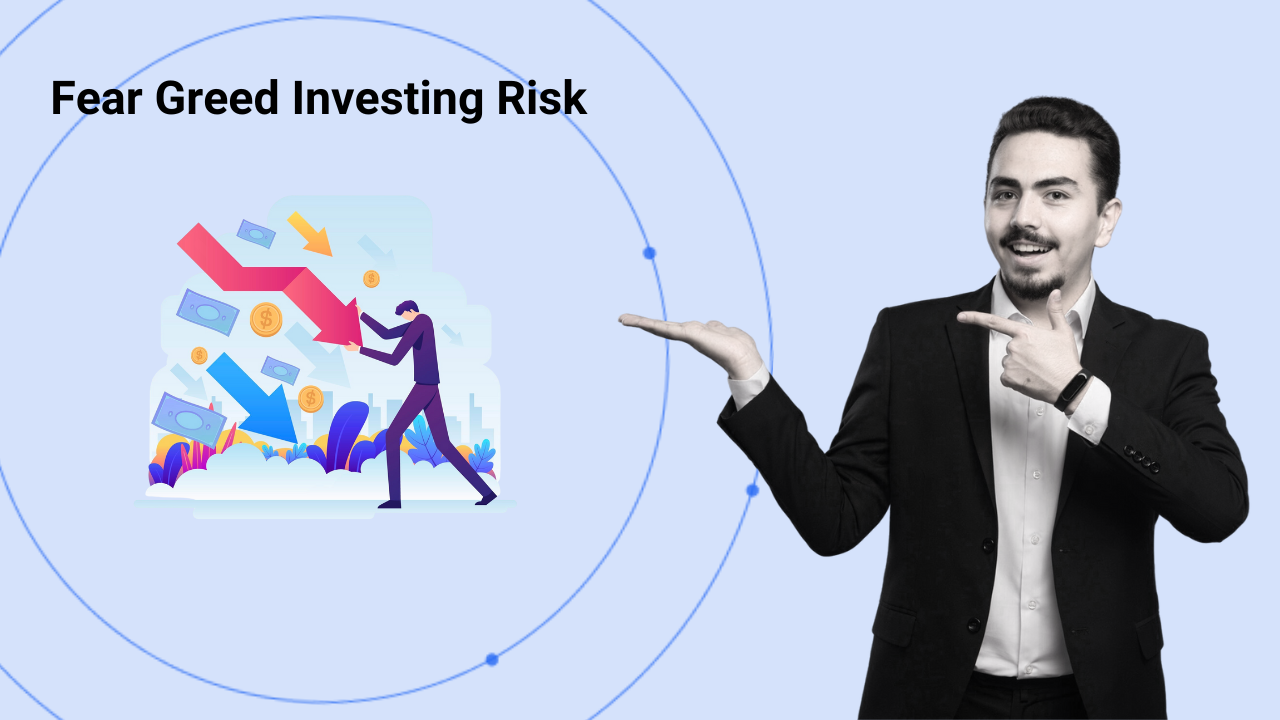
Fear makes you freeze. Greed makes you leap. In investing, both can be equally destructive. One causes hesitation, the other encourages overreach and neither leads to lasting wealth. These emotions often feel like instinct, but they’re rarely aligned with your long-term goals. When fear and greed dictate decisions, discipline breaks, and strategy is forgotten.
This blog explores how these emotional extremes quietly erode portfolio performance and how emotional balance, structured systems, and long-term focus can help neutralise their impact.
What makes fear and greed so dangerous in investing?
Fear and greed are not just feelings, they’re behavioural drivers. They influence timing, risk appetite, and decision-making in subtle but powerful ways. While one pushes you to retreat, the other compels you to overextend. The danger lies in how they distort your perception of risk and reward.
- Fear triggers inaction or premature exits. Investors might pull out after minor losses, skip SIPs during volatility, or shift to conservative assets in pursuit of “safety” even when it doesn’t align with long-term goals.
- Greed fuels impulsive entry and overconfidence. In bull markets or when hearing of others’ success, investors chase trends, increase exposure without adjusting risk, and assume short-term success means long-term certainty.
Together, these emotions create a loop of reaction-based decisions that break the rhythm required for compounding. They lead investors away from their financial purpose and into cycles of regret, correction, and hesitation.
How does fear manifest in investor behaviour?
Fear often shows up quietly, masked as caution or risk management. But instead of protecting progress, it can freeze it. When left unchecked, fear leads to hesitation, over-correction, and self-doubt, all of which disrupt disciplined investing.
Common behaviours driven by fear include:
- Selling after minor losses: Reacting to short-term declines by exiting long-term investments, locking in temporary losses permanently.
- Avoiding equities after a correction: Once burned, many investors avoid higher-return asset classes out of discomfort, even when it contradicts their goals.
- Over-diversifying or under-allocating: Excessive caution leads to fragmented portfolios with diluted returns, or too much money held in low-growth assets.
- Hyper-monitoring: Checking your portfolio daily out of fear causes stress, reduces perspective, and invites rash decisions.
Fear creates the illusion of safety but in reality, it distances investors from growth. The challenge isn’t to eliminate fear, but to acknowledge it without letting it dictate your financial choices.
What does greed look like in practice?
While fear often masquerades as caution, greed hides behind ambition. It shows up when investors are emboldened by success, either their own or someone else’s, and feel tempted to stretch beyond what’s rational.
Behaviours driven by greed include:
- Chasing trending stocks or sectors: Jumping into themes that have already rallied without understanding fundamentals or personal risk compatibility.
- Overexposing to a single asset or theme: Letting one position dominate the portfolio due to recent gains, ignoring the risk of reversal.
- Ignoring long-term plans: Sacrificing diversification and consistency in pursuit of quick wins, often abandoning the strategy mid-way.
- Neglecting risk management: Assuming that recent success will continue, leading to underestimation of downside potential or skipping stop-losses.
Greed pushes investors into overconfidence. Instead of seeing gains as outcomes of a sound process, they begin to see them as validation of instinct which often leads to poor decisions, especially when the cycle turns.
What mindset helps investors overcome fear and greed?
The antidote to emotional extremes isn’t indifference, it’s awareness and alignment. The Gita’s timeless principle of acting without attachment to results mirrors the ideal investing mindset: focused on effort, detached from outcomes.
Here’s how investors can embody this mindset:
- Prioritise process over outcome: When the focus is on following your strategy, allocating correctly, investing regularly, reviewing periodically, short-term fluctuations lose their grip.
- Clarify your financial dharma: Know your purpose whether it’s retirement, education, or wealth creation and let that guide your decisions, not the market mood.
- Create mental distance: Detachment doesn’t mean apathy. It means reducing emotional reaction to performance. Gains and losses are part of the journey, not definitions of success or failure.
- Act with rhythm, not urgency: Like breathing in yoga, your investing actions should have a measured pace, SIPs, scheduled reviews, defined rebalancing, not impulsive trades.
By shifting from emotion-led investing to value-aligned action, investors cultivate consistency, replacing volatility of mood with steadiness of method.
How model portfolios reduce emotional interference
When fear or greed intensifies, clarity fades and that’s where structured systems play a vital role. Model portfolios are not just about diversification or allocation, they’re behavioural frameworks designed to keep you grounded.
Here’s how they help:
- Remove guesswork: With predefined strategies built around risk profiles and financial goals, model portfolios eliminate the need to constantly decide what to do next.
- Encourage consistent execution: Whether it’s SIPs or periodic rebalancing, these portfolios promote rhythm so actions are taken on schedule, not in reaction to market swings.
- Protect against emotional extremes: By providing balanced exposure, model portfolios prevent overconcentration and cushion against panic exits during volatility.
- Anchor to goals: Every asset has a reason. This helps investors stay connected to purpose, reducing the lure of chasing returns or fleeing from dips.
In essence, model portfolios act like a guardrail keeping your investments aligned and your decisions calm, even when your emotions aren’t.
Building emotional discipline: Practical steps
Fear and greed can’t be eliminated but they can be managed. Building emotional discipline doesn’t mean suppressing feelings; it means creating space between impulse and action. Here’s how to cultivate that space:
- Keep a behavioural journal: Note your emotional state during market highs and lows, and reflect on the decisions you made. Over time, patterns will emerge and awareness becomes your first defence.
- Set action boundaries: Decide in advance when you’ll review or rebalance your portfolio. Stick to these windows to avoid reactive decisions driven by short-term noise.
- Commit to SIPs, especially in tough times: Regular investing through volatility strengthens your discipline and ensures you continue participating in long-term growth.
- Focus on process feedback, not just portfolio colour: Ask, “Did I follow my plan?” rather than “Did I make money today?” This builds resilience and long-term perspective.
- Seek structure over control: The need to constantly adjust or monitor your investments is often a response to anxiety. Instead, lean on structured tools like model portfolios to carry the emotional load.
Discipline is not about being emotionless. It’s about being emotionally aware and acting with intention instead of reaction.
Conclusion: Control your emotions or they’ll control your returns
Fear and greed are part of being human but they don’t have to drive your investing. When these emotions go unchecked, they blur judgement, disrupt discipline, and fracture financial growth. The real challenge isn’t avoiding fear or greed, it’s learning to observe them without letting them steer your decisions.
Long-term wealth is not a product of prediction, it’s a result of consistency. And consistency is only possible when emotion is balanced by structure.
At Streetgains, our model portfolios are designed to reduce emotional interference and support steady, goal-aligned action. They help investors replace instinct with intention so that even in the most uncertain moments, you remain clear, calm, and on course.
Disclaimer:
The content in this blog is intended for informational purposes only and does not constitute investment advice, stock recommendations, or trade calls by Streetgains. The securities and examples mentioned are purely for illustration and are not recommendatory.
Investments in the securities market are subject to market risks. Please read all related documents carefully before investing.
Managing Fear and Greed in Investing FAQs:
Because they lead to impulsive decisions, like panic selling or chasing returns, that break long-term strategy and compounding.
If you’re reacting to market noise, switching funds frequently, or checking your portfolio obsessively, emotions may be guiding your actions.
Avoiding equity exposure, stopping SIPs during volatility, or selling after small losses are typical fear-based behaviours.
Jumping into trending stocks, ignoring your plan, or overexposing your portfolio without adjusting risk.
Yes. Through self-awareness, structure, SIPs, and scheduled reviews, you can reduce their influence over time.
Because markets are unpredictable, only consistent, strategy-led action leads to sustainable wealth building.
They offer structured, rule-based investing, removing the need for constant decisions and emotional guesswork.
No. If your goals haven’t changed, staying invested, especially through SIPs, often leads to better long-term outcomes.
Journaling, automation, reviewing based on schedule, not sentiment, and aligning all decisions with long-term goals.
Streetgains provides model portfolios built with behavioural insight helping investors stay emotionally steady, process-driven, and aligned with purpose.
FAQs:
-
1. How to earn money daily from trading?
Earning money daily from trading involves strategies like day trading, where traders capitalise on small price movements within the same day. Success requires real-time market analysis, quick decision-making, and risk management.
-
2. How to earn money from equity trading?
To earn money from equity trading, you need to buy stocks at a lower price and sell them at a higher price. Success depends on researching companies, analysing stock trends, and using technical or fundamental analysis.
-
3. How to earn money from share trading in India?
In India, share trading offers profit potential through buying and selling stocks on exchanges like the NSE and BSE. To maximise returns, traders should use market research, tools like technical analysis, and risk management strategies.
-
4. How to make money from share trading in India?
Making money from share trading involves selecting the right stocks, timing the market, and implementing trading strategies like swing trading or day trading while staying informed about market trends.
-
5. How to transfer money from a trading account to a bank account?
To transfer money from your trading account to your bank, log into your trading platform, navigate to the funds section, and initiate a withdrawal request. The money will typically be credited to your linked bank account in 1 to 3 days.
-
6. How to withdraw money from a trading account?
You can withdraw funds by logging into your trading account, selecting the withdrawal option, and selecting the amount to transfer to your bank account. Ensure your bank account is linked and follow any steps your broker requires.
Want Daily Stock Recommendations That Are Generated By Our Analysts ?
Join 3 Lakh+ Investors who have tried our Services